
Past Reviews Sound Advice Reviews French origins: |
|
|
Two classic tales by writers from France in the 1800s and set there in that time period–"Les Misérables" and "The Count of Monte Cristo"–both have protagonists who suffer long stays in prison and escape, taking on new personae and new lives, and seeking revenge. The books have been adapted for the stage and screen numerous times, in different languages. Recently released are two English-language cast albums: the latest recording of the famous, decades-old musical adaptation of the former and the audio premiere sampling five songs sampling a musical treatment of the latter's New York production. Then, speaking of French roots, let's turn our attention to a vocal collection featuring material sung en français.
The history of Les Misérables, the now-classic musical based on Victor Hugo's 1862 novel, began back in 1980 with a concept album containing songs in French and grew and grew. There have been some changes, additions and subtractions, and other tweaks along the way. In English and numerous other languages, representing staged productions and concerts around the world and studio casts, an insatiable devotee of recordings of Les Misérables could have a collection of more than two dozen versions. Now comes yet another English-language release with performers who were in the London run at the time of this recording as well as people chosen for what's billed as "the Arena Spectacular World Tour," a staged concert extravaganza which has just ended its two-year, 30-city trek in New York City. It had a rotating cast, with the largest roles shared. This new recording captures an especially fine collection of singing actors with vibrant voices, committed emotional performances, attention to detail and diction, and with excellent sound quality and satisfying balance between the vocals and the splendid 14-piece orchestra (the music director is Adam Rowe, with orchestrations by Stephen Metcalfe, Christopher Jahnke, and Stephen Brooker). Theatre fans who haven't been living in a cave for four decades are no doubt familiar with at least the major numbers in this musical, if only through various theatre-leaning vocalists' interpretations in live shows and recordings, not to mention numerous revivals and tours, the 2012 film, repeated concerts on public television, as well as sampling tracks from those many cast albums. Certainly some distinctive and/or thrilling voices have previously handled these heroic and poignant pieces in ways that were memorably grandiose and intense, while others gave moving readings that were strikingly restrained, depending more on nuanced acting than bravura bombast and melodrama to convey rage and rue. The rewarding renditions by this mix of people–some of whom have past histories with the property–generally strike the ear as avoiding tempting excesses. Judiciously, some lines in songs are flavored with feelings expressed with a growl, cry, or yell, briefly allowing less emphasis on the potentially "pretty" or powerhouse melodic passage. But rarely does it feel jarring or self-indulgent to the point of short-changing the strength and flow of the music. The company on this recording includes: Killian Donnelly (a sturdy and consistently sympathetic Valjean); Bradley Jaden (an especially troubled Javert); Jac Yarrow (a noble but somewhat subtle Marius); Katie Hall (a properly pity-inducing Fantine); along with suitable turns by Beatrice Penny-Touré (adult Cosette), Shan Ako (Eponine), and James D. Gish (Enjolras). Also present are Adam Gillen and Marina Prior as the married Thénardiers. The selfish couple's lively songs, while largely mean-spirited and biting, provide a change of pace and de facto comic relief from the plethora of sorrow and earnestness heard in many other numbers. The broadness of their takes feels more prominent and emphasized here than in other versions. While many solos are moving and well delivered, such as "I Dreamed a Dream" by Katie Hall and "On My Own" by Shan Ako, a couple of choices within solos may disappoint. For example, the purity of the lovely, aching prayer "Bring Him Home" as sung by the otherwise winning Killian Donnelly is gorgeous until the vocal turns mood-shatteringly strident in a fraught section near the end. And some of Bradley Jaden's more determined and tortured moments may feel over the top. Most group numbers are impressively dynamic and potent, with thrilling harmonies and calibrated builds in energy. The climactic but complicated ensemble work on "One Day More" is a truly satisfying showstopper. This 2026 release is labeled "The Complete Recording," and it is generous indeed with 43 tracks that take up two full CDs in the physical format. But collectors and Les Mis history-infused fans and others can quibble with the semantics–"complete" compared with what? It may quite fully and fitfully represent recent live presentations, but, going back to the early versions of the score, things were cut that had initially been recorded, like Cosette's solo titled "I Saw Him Once" and a different rousing number for the student revolutionaries, on the French concept album but cut in previews of the stage version, and other numbers were shortened: "Little People" for the young boy Gavroche, sequences in the sewers, a verse here and there, some dance music. Big and small trims resulted in the initial playing time of the mammoth stage show to be reduced by about an hour. Only an ultimate "mix tape" combining the longest known recorded version of everything once recorded and staged would be enough for those dogged completists who want every mystery missing piece in its full length. There is a booklet with credits, photos, and thoughtfully retrospective essays by longtime producer Cameron Mackintosh, theatre critic Dominic Cavendish, and writers of the original score: Claude-Michel Schönberg, the composer, and Alain Boublil, writer of the French libretto (Herbert Kretzmer, who penned the English version passed away in 2020). Even if you know the plot and many of the songs by heart, you can expect to be pulled in and impacted all over again, despite the absence of the element of surprise. Characterizations, lamenting, desperation, and expressed worries can feel involving and authentic, even if it's exhausting in its parade of tragedy and (spoiler alert) deaths. Sadly, the backdrop of strife, revolution, and dire poverty from so many years ago finds resonance anew (again) in the current national and international realities. And that's no surprise either.
As someone who attended this spring's full-length production of Monte Cristo presented by the York Theatre, I can verify that the tracks just released, sung by members of its cast, are welcome reminders of a worthy score, but the selections only hint at its assets and variety. Alas, there are only five songs and only three cast members are represented, whereas the company had 11 performers, many of whom had key roles. But one must be grateful for enjoyable appetizers even when wishing for the remembered banquet. And these five numbers, if not groundbreaking or quite dazzling, nor representative of the musical's scope, are pleasing as stand-alone items and may well intrigue those who missed the show whose title shortens that of the source material, The Count of Monte Cristo (the original French novel from the mid-1800s by Alexandre Dumas and a play based on it–which made some major plot changes–by Charles Fechter, one of many adaptations over the decades). The singing voices are appealing and bring out the attractive contours of Stephen Weiner's accessible music and the unabashedly sentimental or nakedly confessional elements in the lyrics of Peter Kellogg (also the bookwriter). Four of the five selections are sung by the leads, Adam Jacobs (Edmond) and Sierra Boggess (his love interest, Mercédès): a solo for each and two duets. Ardently and poetically comparing a loved one's presence to a star ("However dark the night, wherever I may roam, I know I'll find your light"), the first of two duets for the enraptured couple, "You Guide Me Home," is a nice old-school declaration of devotion. He restates the metaphor, "You are the stars that guide my way," in their other duet here, called "Kiss Me," which owes even more to the grand formality redolent of dramatic demonstrativeness in operettas ("Kiss me! Kiss me! Kiss me one last time or I may die"). It is, however, a song in which the woman tearfully insists that they must part. The male solo for protagonist Edmond is the shortest piece, clocking in at 2:14. It's called "Is Anyone There?," his lonely, anguished cry when unjustly imprisoned. The despair does not build to over-the-top rage or hopelessness. In fact, it might be too restrained, considering the situation and the fact that the character knows he was framed. The female solo, "How Did I Get So Far Away," is partially a series of questions, wondering how she ended up in the troubling situation she's in, sometimes poetically ("When did the stream I had to cross turn into the sea?"). Most gripping and powerful is "A Great and Noble Man," a solo for the character played by the dynamic Norm Lewis. This song of regret and self-chastisement, with a man calling himself a coward as he struggles with his conscience and sleepless nights. The performance showcases the actor's coiled ferocity and musicality with thrilling, rumbling low notes in most of the piece and vulnerability and heartbreak in unexpected very high, delicate tones in the last part. Captivating and artful orchestrations by music director David Hancock Turner, also a pianist in the production, strongly support and deftly decorate the soaring emotions and musical architectures. He's become quite the go-to musical leader for York Theatre productions in recent years. A new team has signed on as executive producers for this new musical, so there's reason to expect future presentations of the show and perhaps to "count" on a Monte Cristo full-length cast recording. Stay tuned.
When the timbre of a voice is as sweet-toned as vocalist Emilie-Claire Barlow's, and the melodies and arrangements are easy on the ear, performance in a foreign language is not a deal breaker. The tone and tunes are good musical company. This lady's ease with singing in French comes from growing up in Canada, and the all-French content on her new album, La Plus Belle Saison, is a nod to Quebec, where French and English are both spoken (and sung). She also performs in English, Spanish, and Portuguese, as demonstrated on an earlier recording reviewed in this column, titled Spark Bird. It was an attractive set of songs connected to birds. The new release–her 15th–sparks interest for its charm, her very pretty timbre, and catchy or mellow rhythms, whether or not you know the language. (It's mostly time spent listening to French songs over the years that reinforce my surprisingly strong retention of my language class in high school, and the words to all 11 numbers are easily found on the internet, too.) Many of the songs are about being in love, mostly focused on its positive aspects, with most of them low-key, lilting, legato. High notes are particularly lovely. Gentle moods dominate the first several tracks. (One, in fact, "Si doucement," translates as "So Gently.") But there are others with some edge or traces of melancholy, and a few launch into percolating tempi. There's also some variety in styles and genres on these cover songs; the span of time when the original versions appeared represent many different decades. Three of the songwriters effectively join her vocally on their compositions–Damien Robitaille on "Quelles sont les chances?"; Jim Corcoran on "D'la bière au ciel"; and Gilles Vigneault on the compelling final track, "Pendant que." Musical accompaniment varies from track to track, with instruments including mandolin, Mellotron, harmonium, strings, brass, etc. and three female background singers make appearances. Orchestrator François Richard co-produced with the singer and he's the pianist and arranger for most tracks. The collection's title translates as "The Most Beautiful Season," but beautiful voices like that of Emilie-Claire Barlow are always in season. |
|
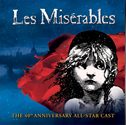 LES MISÉRABLES
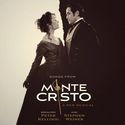 MONTE CRISTO
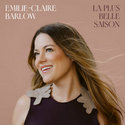 EMILIE-CLAIRE BARLOW