
Past Reviews Sound Advice Reviews "M" is for music from Matt, Martin, Mark, Maria, and Marina |
|
|
Describing his autobiographical set of 10 songs, Sad Zaddy, about the unraveling of the marriage of a same-sex couple with an adopted child, songwriter-performer Matt Gould describes Sad Zaddy as "me turning emotional ruin into a neon-lit disco ritual." It's intense. Category-wise, it was called "a virtual musical" when presented on Instagram. Full of frustrations, frazzled nerves, rue, and realizations, it is sometimes brash and bombastic, and occasionally gentle. The combination of catharsis and cacophony is an open wound of confessions and observations created and performed by this man who was the composer and bookwriter for the striking musical Lempicka that was on Broadway briefly in 2024. When the thick layers of musical sounds and voices are stripped away, impressively robust solo vocal power comes through in soaring sustained notes. Some tracks have floods of lyrics, with the kind of repetition that often comes with musicalized fits of anger. And some of those words appearing with frequency are those two harsh four-letter words that start with F or S. Those expletives are part of the explosions, and some people casually spout coarse words as a matter of course these days, but some of us would more happily live without their increasing presence in lyrics. There's a respite from the rough lingo and the more thunderous, throbbing music and singing in the program's most artful selection; it's called "A Rock in Rushing Water." The metaphors in the lyric have a melancholy, with Matt Gould describing himself as a rock in a stream ("The more I'm still, the more you wear me down"). Begrudging acceptance of the end of the relationship appears in "Disappear," sighingly surrendering to reality ("That's the way it goes... Sometimes there isn't rhyme or reason/ You have to just walk on"). Not quite a one-man show, credits for additional music and production go to Keir Schmidt and Andrea Moore. Singer India Carney is featured on "The Game," which has references to the games of Monopoly and TV's "Wheel of Fortune." The ties meant to bind are frayed, but not so easily broken in the sadness of Sad Zaddy.
Three songs from Broadway musicals, two numbers that were introduced in films, a couple of other old standards, and a 1979 hit for Michael Jackson are all contained in Martin Bonventre's release, but what isn't contained is his enthusiasm. It's endearing and entertaining. He's gallant and game, but he still seems kind of green in a charming kind of way as the singer/actor/dancer metaphorically steps into the shoes of earlier balladeers and leading men who led the way to making the material memorable. In Swingin' in a New Dimension, with arrangements and production by his voice teacher, Jackie Presti, the guy sounds more fully at ease in navigating some passages than in others, but it's unpretentious and the desire to please is palpable. Although he's in his 30s, the sound is boyish, bright, and breezy as baritone Bonventre dives into the music. He has performed regionally in several musical theatre classics, but none of those scores are sampled here. Instead, he takes on a ballad from 1981's Woman of the Year, the wistful "Sometimes a Day Goes By," and two upbeat things from the 1960s. He's buoyant and bubbly on "I'm All Smiles" from The Yearling and the title song from She Loves Me. Another number introduced in that decade is "You Must Believe in Spring," and the pianist of this recording's quintet, Jason Yeager, shines in his spotlight moment with a lovely lengthy solo, deftly handling the Michel Legrand melody before the vocalist enters. The recording became available in CD, digital and vinyl formats just last week and a concert in Manhattan with the singer and the same musicians, celebrating the release and featuring the material, is set for the last night of January at the Laurie Beechman Theatre on West 42nd Street.
Releases by singer/songwriter Mark Winkler (who doesn't exclusively present material with his own lyrics) are never less than interesting. Fortunately, they come along with some frequency. The 11-track Hold On, his most recent, is an especially rewarding recording, with a lot of variety. Musicians vary from track to track, making for an unusually large cast of musical characters: six different pianists and nine other instrumentalists, plus background vocalists. He co-wrote seven of the numbers; four of those are collaborations with Greg Gordon Smith, who also is one of the pianists on two selections and did arrangements for five. Mr. Smith is involved in all three ways, in addition to providing spoken narration, for the hauntingly atmospheric story-song titled "Train in the Desert." It has a decidedly film noir/mystery style. Grant Geissmann's intense jangly guitar work adds to the aura of danger. A sly, cutely contrasting piece involving these three men has another form of transportation as its subject: blithely boasting about driving "My Electric Car" ("just plug it in and go, go, go!"). Blasts of brass in a longish instrumental section provide a musical kind of gas to fuel the energy. Yet another form of travel, a spaceship, is mentioned in the fun sci-fi frivolity telling of "Cat Women on the Moon" (melody, arrangement, piano by Jamieson Trotter). Other musical tones are present, too; the moody and mature "I Dream of You Each Night," with music by fellow singer-songwriter Spencer Day, is drenched with longing and loneliness. Its lament about having to hide feelings of same-sex affection was inspired by the in-the-closet frustrations in the mini-series "Fellow Travelers" and the number also reminds me of the similar tone and subject matter of the musical Play It Cool, with Winkler lyrics. Speaking of musicals, one selection from a classic Broadway score is in this set, with a snazzy rendition of "If I Were a Bell" from Guys and Dolls. Also included to good advantage in a serious vein are the reflective "It Was a Very Good Year" by Ervin Drake (his first name is unfortunately spelled incorrectly in the credits) and a fully realized and impactful reading of the carpe diem advice and perspective of "Vienna" by Billy Joel. A thoroughly satisfying mix, Hold On is definitely a recording to hold onto.
On Maria Corsaro's debut album, Love Makes the Changes, the liner notes by both the singer herself and her producer, David Friedman, emphasize the goal of finding an approach to the material that aims to comfortably combine the best aspects of two styles: cabaret and jazz. In listening, sometimes it may seem that one sensibility is more heavily weighted at the expense of the other, that you wish the vocals were looser and freer, or had more oomph, perhaps that some drama in a lyric was sacrificed in favor of emphasizing the contours of a melody line. The ambitious repertoire includes pieces that began as instrumentals, composed by heavyweight jazz icons that weren't originally written to be sung (but gaining lyrics by someone else eventually). Her vocal tone is warm, her attentive and conversational phrasing is thoughtful on love songs with challenging shapes and rhythms, but there can be a fine line between sounding caring and sounding too careful. However, it starts to feel less like a tentative tightrope walk the more one listens, and the choices of compromises leading to finding a successful comfort zone feel more and more apt. Fortuitously, the ace musicians involved know their way around different styles, as they are not solely residents of the planet of jazz. Focused, unfussy pianist/music director/arranger Gregory Toroian's tastes and talents have led him to cabaret settings and singers for years, and the same is true for bassist Skip Ward and drummer David Silliman. And saxophonist/flautist Mark Fineberg has worked in varied genres. For me, the album's highlight is "That Day," the rich theme from the motion picture Cinema Paradiso scored by Ennio Morricone (lyric by Stan Dunn). Songwriters represented twice, to fine effect, are lyricists Roger Schore and the wedded wordsmiths Marilyn and Alan Bergman, as well as composer Antônio Carlos Jobim. Track times range from a brisk "Walkin' Shoes" at two minutes and 13 seconds to almost five minutes for lingering luxuriously in the serenity and sincerity of "You Taught My Heart to Sing." Maria Corsaro certainly appears to be singing from and with her heart.
Featuring jazz instrumentalists, there were six albums dedicated to music composed by jazz trumpeter Carl Saunders before he passed away at age 80 in 2023. In the same year, singer Marina Pacowski released her attractive debut recording, Inner Urge, reviewed in this column at the time. She was chosen as the premiere vocalist to continue the series with New Jazz Standards: Volume 7, and now lyrics–penned by various writers (including the late Mr. Saunders himself)–are in the spotlight, too. Of special note is a lyric by Alan Bergman ("Feels Like Home"). The vocalist also did much of the arranging. Some of the words take extra attentiveness to catch the first time around due to some very fleet tempi, complex melodies, and the soprano's French accent. Her high, bright sound tackles the tricky tempi and she seems to be having a ball, especially on a cheeky number like "Is That Asking Too Much?" with a Saunders lyric. Sometimes she takes a break from actual words by launching into dazzlingly sunny scat-singing to ornament the melodies. A special highlight is the adorably cozy "Sweet Talk," a vocal duet with guest John Proulx which also features the sole appearance of veteran clarinetist Ken Peplowski. Subject matter includes odes to pleasures associated with: the composer synonymous with bossa nova ("Theme for Jobim"); being "High on Blueberry Pie"; and "August in New York," the opening number which starts with quick instrumental nods to the city, quoting numbers born on Broadway–"New York, New York" from On the Town and Rodgers & Hart's "Manhattan." Beyond those little cameos, there are a couple of other non-Saunders melodies: "I Need a Dream" is by his uncle, bandleader Bobby Sherwood, and the final track finds Miss Pacowski at the piano herself with Chopin's famous "Minute Waltz." The skillful Josh Nelson is the pianist on the other 13 songs. Full credits, photos, and detailed liner notes about the project and its participants are in the 12-page booklet that comes with this ear-opening CD. |
|
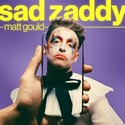 MATT GOULD
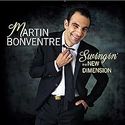 MARTIN BONVENTRE
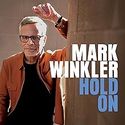 MARK WINKLER
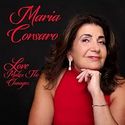 MARIA CORSARO
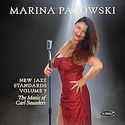 MARINA PACOWSKI