
Past Reviews Sound Advice Reviews Music with an 'M': |
|
|
Here are some singers of note whose first names happen to start with the letter "M" as in "Music." Ladies first: Melissa Errico and Meltem Ege, then three gentlemen: two West Coasters named Mark (Winkler and Miller) and New Yorker Marcus Goldhaber. Each has his or her own special qualities in these five albums, with a couple of songs appearing on two of the releases: "Skylark" and "I'll See You in My Dreams."
With a serious and cerebral approach to love songs, mining the full potential of words and music, singer/actress Melissa Errico and pianist Tedd Firth present a thinking person's panoply of mostly mid-20th century classics in I Can Dream, Can't I?. Moods are established immediately–sometimes with this masterful keyboardist setting the tone on his own for a minute or more before the vocal comes in. With attention to detail, the singer's ultra-pensive phrasing is full of in-the-moment explorations of the statements and questions in lyrics that feel like sighing realizations and reality checks putting hope and hurt in perspective. With the underpinning of the pianist's sensitive playing, she presents a person theorizing and realizing, analyzing feelings, processing pain, and getting philosophical. The considerations and conclusions may be addressed to a lover, possibly in absentia–or, in the case of Dave Frishberg's "Listen Here," to oneself. So, the album's subtitle, Illusions and Conversations from the Great American Songbook, is definitely apt. On the same page with their agenda, the pair seem to leave no emotional stone unturned as they methodically go through the repertoire and delve into the love-drenched atmospheres. Two lilting but lonely laments feel like "cousins" in song because of their shared mature point of view and their specific titular reference to spring bringing better times. These pieces reinforcing the need for patience are "Spring Will Be a Little Late This Year" by Frank Loesser and "There'll Be Another Spring" by Peggy Lee. Contrastingly, quiet despair is in the air with Cole Porter's "After You, Who?." Unrequited and/or unspoken love come under the microscope, resulting in wistfulness with more than a hint of wryness in two selections with Jerome Kern melodies: "Remind Me" and "All in Fun," with lyrics by, respectively, Dorothy Fields and Oscar Hammerstein. Poignancy prevails. Tempi is often slow, allowing time to parse words with pauses, as well as to emphasize–and linger over–individual words and phrases so that they really sink in and the composers' artful melodic choices are embraced. Employed so often, a low-speed pace could be deadly with diminishing returns in other hands, but a listener doesn't lose the thread of any love story here, as the well-crafted lyrics can take the weight and the waits, and Mr. Firth sustains the tension in his focused accompaniment, eschewing unnecessary embellishments. And certainly Miss Errico's committed, involved acting and truly lovely timbre keep things engaging. So, be prepared to be pulled in with these empathetic interpretations. Oddly, the program's choice as a first track is the outlier–not heavy or sober at all, but rather the playful and winking Cy Coleman/ Carolyn Leigh number "When in Rome (I Do as the Romans Do"), freely admitting a willingness to philander and flirt with others. For those who play an album in track order, its sauciness makes for a misleading first impression when what lies ahead is so much drama that treats love as sacred and anything but disposable. Melissa Errico appears in Manhattan at 54 Below this week with her program of songs connected to Barbra Streisand. (Billy Stritch is her musical partner for that.) Meanwhile, Tedd Firth seems to be everywhere.
While she also has performed standards and songs from musical theatre, in English, the release titled Solitude from singer Meltem Ege showcases her own writing and family roots. Reflecting her times living in both California (where she's currently based) and Turkey, the atmosphere-drenched program finds her singing in both English and Turkish, featuring her own lyrics (with one exception), and was recorded in both Los Angeles and Istanbul. Her voice can be ethereal, delicate, or intense, with the musical accompaniment choices and energies complementing those different vocal colors. Instrumentation varies from track to track on the eight-song set, including a string quartet, brass, flute, and guitar. Two of the numbers have melodies by the L.A. sessions' guitarist, Derek Bomback, two are by Lucas Longaresi, and two have Miss Ege's own melodies. Those looking for something different and daring will discover welcome diversion and pleasures here. Your mileage may vary, but certainly some selections may be more engaging and accessible than others, not necessarily due to not understanding Turkish. (There are no lyrics in either tongue enclosed with the CD, but the singer's liner notes describe the material as having the "pulse of both lands with echoes of my adventures, heartbreaks, and longings.") There are times when a promising start segues into what might be heard as overheated overkill, most noticeably with the line in "Dawn" that becomes more and more an anguished cry as "Dawn comes along just the same" (or, alternately, pointedly, "Dawn comes along, without you, just the same") for a total of ten times. This piece is the aforementioned exception to having been written or co-written by the singer; its words and music are by Will Kjeer, who arranged an especially compelling selection, "We Must Not Say Yes," with much credit for this being such a highlight due the magnetic voice of her duet partner, the adventurous Theo Bleckmann. As sometimes happens, the presence of one guest artist of whom I've been a longtime admirer is enough for me to pique my interest in albums by top-billed vocal or instrumental artists who are new to me. Solitude is in that "acquired taste" category, but its best moments are worthy of attention and repeat listenings may increase satisfaction.
Happy anticipation resulting in relaxing in a disappointment-free zone is what fans such as I have come to expect with each new release by jazzy singer/lyricist Mark Winkler. Although he has also favored us with theme albums as tributes to songwriter/performers (Bobby Troupe, Laura Nyro), Love Come First has come along as his 23rd recording, with his more typical agenda of mixing originals and standards, with doses of sly humor and unpretentious observations, and employing a wide variety of instrumentalists (varying from track to track). His easygoing, smile-inducing, and down-to-earth manner make for good company. The half dozen items with his own words include the self-deprecating wink claiming career contentment with modest acclaim and fandom, as someone who is "Fame Adjacent" rather than one who has achieved worldwide superstardom. That one has music by Jamieson Trotter, who is also the pianist on the song. The Winkler way of skillfully turning pet peeves into song comes through with a number carrying a blunt title, "Why Are People So Stupid?" (music by Dan Siegel), and humor is put aside when things get reflective in "Did You Ever Wonder?," second-guessing a too-hasty break-up of a relationship (a collaboration with composer Chris Gordon). Broadway-born favorites favored this time–all schmaltz-fee–are "More Than You Know" from Great Day! back in 1929, the Gershwins' ballad "Embraceable You" from the following year's Girl Crazy, and a 70-year-old evergreen from Bells Are Ringing that is currently heard on the Great White Way, providing a jukebox show with its title number: "Just in Time." And this latest Mark Winkler appears just in time as a recommended pick for a pick-me-up.
Gentleness emanates from the voice and M.O. of Mark Christian Miller. His non-grandstanding manner stands him in good stead most of the time on his fourth recording, Strange Meadowlark, named for a charming piece written by jazz pianist Dave Brubeck and his wife Iola; birds of a feather flock together nicely when this is paired with a better-known bird item, "Skylark" by composer Hoagy Carmichael and lyricist Johnny Mercer. The latter writer is also represented, with his own melody, too, with the cozy "Dream." Amiable and heartfelt, Mr. Miller's renditions are pleasing and nostalgic. A most welcome choice is the simple but effective number that resulted when Henry Mancini's daughter wrote a poem expressing her too-seldom expressed gratitude for loved ones, and the composer supplied a melody, resulting in "Sometimes." Sometimes the mood or pace is more lively, such as the slinky opening in the persona of a cool character calling himself "Mr. Kicks" (Oscar Brown, Jr.) from a 1961 musical titled Kicks and Company intended for Broadway, but which closed on the road. "I'll See You in My Dreams," a standard that is now more than 199 years old, starts off with a tone that suits the tune and sadness in the lyric of the introductory verse that refers to pining for a love who is now gone, but then the mournful mood is oddly hijacked by jaunty rhythms. Arguably, the interpretation might be that "seeing" someone in dreams who is absent in one's real life is happy-enough compensation, but it's a missed opportunity to go for the heartbreak that words in the chorus also reinforce. There are only nine tracks, but they are on the long side, except for "Sometimes," on which the singer provides his own piano accompaniment and arrangement. Otherwise, most keyboard work and arrangements are courtesy of Chris Dawson. The lengthy playing times allow the small group of musicians to stretch out and for relaxed, unrushed stays in the pleasing soundscapes and primarily cheery moods. There's a kind of calm and/or breeziness in these renditions that radiates genuine (non-sticky) sweetness that can be quite refreshing.
Sentimental in the best way possible, Marcus Goldhaber's writing and singing of his endearing original songs are retro and romantic, unabashedly affectionate in presentation and the craft evoking the feel of mid-20th century Great American Songbook items. Some of those sit comfortably side by side with his own music and lyrics, treated with the kind of fondness and respect that we can assume must have motivated his own instincts as singer and tunesmith. We don't really have to assume, because James Gavin's liner notes, with Goldhaber quotes about that golden age, spell it out, telling of his piano-playing mother introducing him to the gems. So, his self-penned, enthused, upbeat portrait of a great "Uptown Cabaret" complements the more lush and dreamy rendition of Rodgers & Hart's "There's a Small Hotel," as an idyllic honeymoon spot. The guy seems to be floating in a boat, gliding down the Tunnel of Love–and not alone. Wait–there are exceptions to that first impression caused by the seductive flavor of the crooning, melody, and accompaniment. Indeed, there is a surprise ending to "You Are a Love Song," a charmer that is a metaphor (or, if you will, meta), crystallizing the connections. In the crooning "I'll See You in My Dreams," he appears to be almost full-time in Dreamland with his beloved in view, almost dismissive of the pesky fact of being alone when he's awake. For those very familiar with the oft-recorded standards that tend to stay in the same briskly swinging lane, and appreciate a bold choice that surprises, try the Goldhaber glide through "The Best Is Yet to Come." The Cy Coleman/ Carolyn Leigh number is typically taken in a faster way, bursting with self-assurance and glee. Here, very much slowed down and lush, each promise of excitement might be imagined and relished, burnished with slow-burning anticipation. It's a revelation. The singer arranged or co-arranged (mainly with the set's fine pianist, Art Hirahara) the material. Occasionally, the instrumental work or tempi are distracting or upstage the atmosphere that's been established. The standard "Skylark" about a bird in its "lonely flight" similar to the unhappily solo state of the lyric's narrator seems a mismatch for the energized "push" and pace that fills its latter section; the energized reed-playing (Jay Rattman) is impressive on its own, but odd casting for a skylark when a flute might suit the job. A CD release show is set for July 16 at the Manhattan jazz club Mezzrow; meanwhile, the most "Mezz"-merizing Marcus Goldhaber tracks will keep listeners in a romantic, nostalgic frame of mind. |
|
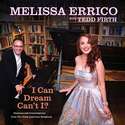 MELISSA ERRICO
 MELTEM EGE
 MARK WINKLER
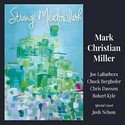 MARK CHRISTIAN MILLER
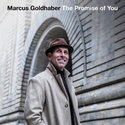 MARCUS GOLDHABER