Past Reviews Sound Advice Reviews A big building, a disco's denizens, a COVID coma, and some Girl Talk |
|
|
How about a quartet of varied listening possibilities? Let's start with two musicals, both focused on places in Manhattan (where they were eventually performed). One centers on dance clubs in the late 1970s and the other is the story of a skyscraper with more than 100 stories: the Empire State Building. Then we consider a musical representation of the true story of a trombone player's life-or-death drama during the pandemic. We close with a set of mostly familiar oldies on a new release.
It took just a little over a year from start to finish for the gargantuan Empire State Building to be built. In comparison, the musical about it took about a quarter of a century, from first readings to its full production, in the city where the building stands–and for its first cast recording (with that 2024 company) to be released. In between, there have been productions of Empire with in Los Angeles (2003 and 2016) and elsewhere. Over the years, numerous songs, characters, plot elements, and concepts have come and gone, revised and rethought by Caroline Sherman and Robert Hull who share credit for the music, lyrics, and book. The recording of this final(?) version, with a new cast and creative team, has some strong and entertaining material for 22 named characters in the same number of tracks. (The songs written but discarded in the writing process and from earlier versions would fill a few more albums–in an interview, Ms. Sherman says they'd penned 100 songs for the project!) The characters are a mix of people created for the story (some construction workers of distinctly varied ethnicities and their families), actual historical figures who were instrumental in getting the project going (Al Smith, former New York governor and unsuccessful presidential candidate) and financed (business executive John J. Raskob) and composite characters. In the last category, a strong-willed, can-do woman nicknamed Wally was inspired by two real-life people (Belle Moskowitz, an advisor to Smith, and Frances Perkins, who was the first female Cabinet member) and manages things behind the scenes. She is played in a standout performance by Kaitlyn Davidson and is featured in a few of the strongest musical numbers, including a duet with the likeably pizzazzy Paul Salvatoriello as Smith praising their own M.O., called "Our Al and Wally Way." He also cavorts with peppy panache about having "Moxie." The digital booklet indicates who is heard in the songs and it has all the lyrics, but they will only take you so far in understanding the details of the storyline and relationships among the characters. You might not pick up on the fact that the song "My Story" takes place in 1976 as a framing device for someone named Sylvie who has a familial connection to one of the construction workers and that another of the laborers was a woman disguised as a man. Attitudes and desires come through more than plot specifics; there are prominent references to work ethic, teamwork, dreams, determination ("Never Say Never"), and hopes in this story that mostly takes place in the Depression year of 1930. There's earnestness in Empire's title song ("We've worked so hard/ We must continue strong/ This'll be our empire...From dust and dirt a dream will rise...We must try to do some good..."). On the other hand, the cute and catchy "Lookahee" for the guys on the crew trying to attract women is kind of irresistible. Yes, the score is quite varied, despite some redundancy of restatement and some on-the-nose declarations (the workers sing "We'll Work," but, well, it works) and possibly predictable elements (you'll hear many uses of the word "up"–starting with the "Prologue"–and references to being up high above the ground, with titles such as "Castles in the Air" and "Don't Look Down (When You're Going Up"). Acrophobics be advised. But before the stock market crash is the harsh reality check of change, there's a delightful dash of the devil-may-care glee of the roaring '20s with the spiffy company number "Everybody Up/Heyday." Its joyful, jaunty rhythm is emphasized by lots of rhyming with the key word. "Heyday" rhymes with "play day," "have our say day," "all the way day," and "outta our way day," while the plural form rhymes with "gray days," "sweet bouquet days," and "silver tray days." A more serious number, "We Were Here," for Sylvie and Wally, has some impressive rhyming, too, within the span of just a few lines ("He chose to have that moment, one he chose despite the fear/ May the hope he held dear/ Whisper soft in your ear/ Tracing back to the fact he was here"). A seven-piece band accompanies, led by keyboardist Gillian Berkowitz, with orchestrations by music supervisor Lena Gabrielle, who did the arrangements along with the musical's co-writer Robert Hull. All in all, despite some low points here and there, Empire stands pretty tall.
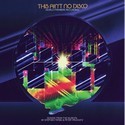
You might think you won't be eager to dip into a collection of selections from the score of a musical titled This Ain't No Disco if you ain't no major disco fan, assuming it's filled with the thump-thump-thump and swirling sounds of that music genre. And you could reasonably conclude that is what you'd get, since there are musical numbers concerned with–and taking place at–the famous dance club Studio 54 in the late 1970s, with its real-life co-owner, patrons, and employees among the characters. But it ain't necessarily so. The title is actually pulled from a Talking Heads song. There's not much more than a hint of disco in this property billed as "a rock musical"; it has diversity in the pop and rock styles–some hard, driving sounds, to be sure, but also some with flavors of funk, punk, and spunk, with some hazy, rueful laments and a cheerier romantic ode and a lullaby. You also might be trepidacious if you skipped the production during its six weeks of performances eight summers ago at Atlantic Theater Company and/or happen to recall that the reviews were mostly harsh. But the negativity was, notably, directed mostly at elements other than the songs and performers. The advantage of cast albums is that we can solely focus on the musical material and singers and how some songs stand on their own. We may not need (or want) to know things about the plot and characters besides what the musical material makes obvious. And, unless you are already in the know from memory or research, the digital booklet won't be helpful, as it doesn't give a synopsis and doesn't always indicate what character is singing. The track list identifies the names of the performers, not whom they are portraying. However, much info can be garnered, gleaned, or guessed from the more direct and specific content of the lyrics. The words to the songs are all included in the booklet, which is a plus because they sometimes are difficult to hear clearly as enunciated here, with the band's accompaniment getting prominence in the mix and some tracks suggesting misty clouds of memory and, dare I say, a drug-like post-party haze–or reasonable facsimile thereof. This belated world premiere recording of numbers from the score is a surprise. It's actually a semi-original cast album, as it features several members who were in the show back in 2018, along with some new-to-the-project guests. Note that some protagonists' songs are shared with others. The six-member band includes the show's co-writers Stephen Trask (who's on keyboards and guitar) and Peter Yanowitz (playing drums and percussion). Both also add some vocals and they co-produced the album along with Diane Mayer. Returning to the project, often in their original roles, are: Theo Stockman, who played Studio 54 co-owner Steve Rubell; Will Connolly, who created the Andy Warhol-like figure; Lulu Fall as one half of a devoted lesbian couple; Chilina Kennedy, who had the role of a publicist; and the formidable Eddie Cooper as the district attorney. His real-life sister, Lilli Cooper (winning on two tracks as Sammi, a single mom seeking a singing career), joins the recording as part of the new studio cast, as do real-life couple Sean Ono Lennon and Charlotte Kemp Muhl (charmingly sharing the number about sharing a "Loft on Lispenard," which includes some dialogue during which they oddly address each other by their real names). Other figures from pop music make appearances, including Jake Shears of Scissor Sisters (for the imploring, rather poignant "Be Like a Son") and Taylor Hanson (of the three brothers billed as Hanson) leading the pleading of "Let Us In." Also on board are two veterans of productions of Trask's Hedwig and the Angry Inch: John Cameron Mitchell (also This Ain't No Disco's bookwriter) for the brief "For What You Are About to Receive"; Lena Hall for the lullaby written for Sammi, giving it a gripping, emotionally naked intensity; and Rebecca Naomi Jones deftly handling "Bleeding Edge." There are moments that are surprisingly vulnerable and wistful, such as Adam Chanler-Berat with the group Tonality bidding "Goodbye 54," but there's much that can feel bombastic, containing lyrics with lots of repetition as well as a few lines with misplaced syllable accents, uncomfortable rhyming ("Glory, glory, let us through the door-e"), and some cries that are repeated enough times in a row, and again later, to be characterized as mantras (or manic manifestos). Examples abound, such as the multiple repetitions of these lines: "Let us in"; "Yeah, I'm having fun"; "Life is a happening"; and "Be like a son." Along the way there are some real likable, irresistible rockers, with a beat that can't be beat for nudging one's inner boppin'-along dancer.
Talk about art imitating life! The true story of musician Ron Wilkins inspired an album of powerful music by a band featuring himself wherein the compositions and playing (plus some singing) evoke and become the instrumental equivalents of an ordeal and its aftermath. The dynamic numbers illustrate the sudden horror and fear with the onset of his very serious case of the COVID-19 illness, his being placed in a medically-induced coma for 32 days, the uncertainty of his fate, and the grateful but slow recovery. The title The Vigil and the Sleeping Giant refers to the watchful waiting and, of course, the comatose loved one himself. Mr. Wilkins wrote much of the music for the first sections, featuring a four-part "Covid Suite" about the experience, as he did recall some nightmares and also addresses his return to consciousness, recovery, and recuperation. Enduring the month-long agonizing vigil of uncertainty, along with family, friends, and colleagues was Rebecca Patterson, his partner in musical endeavors and private life. Her experience and perspective are presented in later pieces, which she composed. She, also a trombonist, plays on the album, too. The eight tracks are all on the long side (ranging in their timings from 5:35 to 10:43), but there is so much going on and so many dramatic and sometimes unexpected changes in melodic content, tempo, texture, and featured instruments that the multi-chaptered "stories" can maintain a listener's interest. There are 18 players in the mighty brass-heavy ensemble. You might think it's full of musicians you've never heard. But there's a Broadway connection here. Even if you treat your ears exclusively to musical theatre–at live shows or on cast albums–you've very likely heard some of them. Allow me to give you some examples: Ron Wilkins was playing in the pit in a tour of Aladdin in Texas when the pandemic caused theatres to shutter and, after his recovery, he was in the Broadway orchestras playing the melodies of Jule Styne in the recent revivals of Funny Girl and Gypsy. You might have heard Rebecca Patterson's trombone when you enjoyed Sweeney Todd, Tammy Faye, or Smash. Among other Broadway veterans here are sax player Aaron Heick with 13 credits over two decades, the terrific Ray Marchica (also a cabaret and jazz club regular) who has drummed in eight shows, trumpeter Raul Agraz, with Beaches the most recent of his six stints on the Great White Way, and multi-instrumentalist Zac Zinger has three, the latest being Titanique. And one of the singers participating is Julie Benko from Funny Girl and Ragtime. The listening experience is combustive, sometimes startling, and eventually cathartic and uplifting. Listening while already knowing the Wilkins story and imagining what the experience would be like (plus adding one's own personal pandemic memories), the music's pace, its peaks and valleys, and its tensions and releases all really feel like a narrative roller coaster ride with a specific trajectory of tragedy and eventual joy and celebration. I suspect that people who might listen to The Vigil... without knowing that it's based on one couple's true drama would get an overall sense of the different moods. The titles of the album and its tracks and the two pieces that have some lyrics give hints. But I can't predict how much I'd sense if I came to the release cold. Certainly, it's a richer and fuller experience if one knows. It's an interesting choice, then, that no information is given on the CD's packaging besides titles and credits and a dedication "to dreamers, doers and survivors." The first two parts of the "Suite" are quite intense and active, the first a kind of prequel, emulating the energetic noise and movement of the big city before everything shuts down, and the second, titled "Comatose Dreams and Nightmares," is rather self-explanatory and sometimes harrowing. Then comes the end of the coma, with vocals by Ron Wilkins doing some muscular wordless vocalizing, some calmer, fleet scat-singing. Earlier, he's joined jubilantly but reverently by Julie Benko and Chloe Holgate, rejoicing with "Alleluia," and a couple of lines with other words he sings do mention seeing light, darkness, and feeling love. One of the most striking and evocative sounds comes in "Near East" when Zac Zinger plays the bansuri, an ancient bamboo flute used in Hindustani classical pieces. Sweet, dreaming respite arrives in the initially legato composition referencing the wish that the couple might again "Waltz Someday." It soon builds in strength and vibrant happiness. Likewise, there's an upbeat feel-good flavor to the concluding number, "Like a Brother," was co-composed by Ron Wilkins and his late musician friend Morgan King. The Vigil and the Sleeping Giant is a giant piece of music worth hearing.
Here's a release from a singer whose creative previous album, called Reimagine (from a year ago, reviewed in this column), was quite impressive in delivering what its title promised: rethinking old songs in intriguing new stylings. That's a goal I'm often on board for, as someone who has heard so many, many treatments of standards and covers of pop hits that follow the most famous versions. Jennifer Madsen's current release, the 11-tack Girl Talk, tends to have the same agenda as Reimagine, but this mixed bag/mixed results endeavor, wherein she works with a big band with the same arranger/pianist, Brent Edstrom, isn't as consistently compelling–despite her appealing voice and the variety of genres. It begins with a fairly traditional, fervent "Besame Mucho," in English, with the only Spanish words retained being the two in the title. There are adventurous treatments indeed, but sometimes the busy instrumental playing and moods seem distractingly/competitively at odds with the intentions of the lyrics. The approach with some of the oft-recorded items comes off as wanting to be different just for the sake of being different. But they don't always land as revelatory reinventions, at least not for me (you and your mileage may differ). Most satisfying is the classic "Misty," the set's outlier, as it's with just piano instead of what's otherwise a large ensemble (four brass players and three saxophones in addition to two percussionists, the pianist, bassist, and guitarist, plus other featured guest players on some numbers). The slow-paced mystique luxuriously settles in for a less-is-more immersion in disarming dreaminess for almost seven minutes. There are three classics introduced in Broadway musical theatre productions from the first half of the 20th century. The most engaging is 1946's "Any Place I Hang My Hat Is Home" (St. Louis Woman), with a consistent, convincing context of the song's wanderlust, assertive in its stance, as the brass blasts support the attitude. Two items from the 1930s put percolating instrumental underpinnings on high; there's more obvious justification for a would-be intoxicating mambo dance rhythm for "You and the Night and the Music," but a disconcertingly brisk "My Funny Valentine" surrenders its usual tenderness and image of the addressed "sweet comic" loved one when encumbered by a caffeinated, cluttered arrangement. (The singer's website describes it as having "subtle rhythm shifts" and a "gentle pulse," but it hardly seems subtle or gentle.) Including the title track of Girl Talk, singer Jennifer Madsen's mixed-bag newest collection features half a dozen songs introduced in the 1960s. The front and back cover showing her in various poses with a bright yellow landline phone with a rotary dial indeed suggest a retro look. (The physical CD itself is even designed to look like a phone's circular dial.) The other '60s picks include the bluesy "Comin' Home, Baby," "Spinning Wheel" (a hit for the rock group Blood Sweat and Tears, written by their lead singer David Clayton Thomas), "The Look of Love," and two numbers with Cy Coleman's melodies (the rarely recorded trifle "You Turn Me On, Baby" with his own words and the feisty, welcome "There's Gotta Be Something Better Than This" from Sweet Charity, with much of the Dorothy Field lyric, but putting in substitute words for the section that originally complained about male customer's behavior). But the gatefold CD packaging does not make room to credit any of the songwriters, and the singer's website, which describes the project and its selections, names only one composer. And, although there's a list of the participating musicians, indicating what instruments they play, a few of the guest artists are mentioned only by name. It's interesting to note that four of these songs were written as instrumental compositions and intended as such, with lyrics added some time later. They are "Girl Talk," "Misty," "The Look of Love," and "Comin' Home Baby." And the English lyric of "Besame Mucho" was written about a decade after the Spanish original and is not a literal translation. Arguably (and hopefully), the more daring designs may reveal their charms with a few more listenings over time. |
|
 EMPIRE
 THIS AIN'T NO DISCO
 THE VIGIL AND THE SLEEPING GIANT
 JENNIFER MADSEN