|
Songwriters are the focus this time. First is the recording of a revue with William Finn's lyrics and Danny Ursetti's music. Next is a parade of vintage showtunes from the songbook of George M. Cohan. Lastly, country meets jazz when brass man Matt White and his colleagues take on the repertoire of a star whose material will also land on Broadway later this year: Dolly Parton.
 ONCE EVERY HUNDRED YEARS:
A SONG CYCLE BY WILLIAM FINN AND DANNY URSETTI
Center Stage Records
Digital
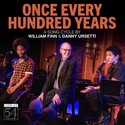
You'd probably expect material in a song cycle reflecting on experiences and feelings surrounding the height of the COVID-19 and the lockdown to be mostly full of fears and tears, with much grief and gravitas. Don't be so sure. Instead, William Finn's lyrics, paired with the melodies of Danny Ursetti (a former student of his), often emphasized humor that is brash or quirky, addressing the altogether natural reactions beyond the basic worrying and wondering. In the set of songs in Once Every Hundred Years, it's more about the day-to-day realities of restlessness, cabin fever, and filling the long and lonely hours with activities. Recorded live in Manhattan at the nightclub 54 Below, the program presents three musical theatre singer-actors portraying characters in various situations (each has a few solos, and there are eight numbers with all three voices, and two duets).
Highlights include Jeff Blumenkrantz's three brief proclamations about being determined to productively use the time to work on mastering piano, a cheery choice for getting through ("I Watch TV") by one of Demond Green's characters, and Zachary Noah Piser as an antsy teenager on "I Can Feel My Heart." Trio numbers are quite effective, with some attractive harmonies and good teamwork, including Once Every Hundred Years' title song (about the presumed frequencies of a world-wide plague) and "Why This Pandemic Was Hell," which unhesitatingly tackles taking Trump to task for making a bad situation worse. Some singing is restrained; some is all-stops-out. While there's some wit and wistfulness in the songs and singing, the impact of those qualities is diminished by frequent uses of the "F" word and other vulgarities, with one regrettable toilet number for the otherwise endearing Mr. Blumenkrantz about being constipated while trying to do the "Sudoku" puzzle.
As things go on, you may start to feel a sense of repetition among the limited topics in the 21 selections, but this neatly has the effect of reinforcing the real-life daily sameness, claustrophobia, and frustrations of life in the slowed-down lane. Music can be jaunty, jangly, or looping. Lyrics are specific to the main topics; you'll often hear the word "pandemic" invoked and whined, and I suppose it's convenient for the matter at hand that "quarantine" happens to rhyme with "COVID-19." We might sense uneasiness and uncertainty lurking underneath the tales of tedium and chosen distractions and denial. And sometimes what's bubbling under is confronted, with catharsis or rage.
Death is addressed in two pieces telling of the losses of two men in William Finn's theatrical orbit: an actor who was in two of his musicals (a portrait of "Michael Mandell" warmly intoned by Mr. Piser) and a musical eulogy by the three for publicist "Bob Ullman," who passed away pre-pandemic at age 97. Another saga of a life ending takes a cheeky tone with the three guys raising their voices in detailing the demise of "My Girlfriend's Dog" (allegedly by "suicide"!).
Musical accompaniment is especially well done, with some charming mood-setting intros and arrangements that support the moods and mirth, as well as providing subtext for what's not stated in words. The splendid quartet is made up of pianist Benji Goldsmith, reed player Rick Heckman, cellist Amy Ralske, and bassist Mary Ann McSweeney. All four have been musicians in various previous musicals by William Finn, the distinctive songwriter who passed away in April 2025, requesting that Once Every Hundred Years be performed in New York City, which happened in November of last year, documented with this release.
 VARIOUS ARTISTS
GEORGE M. COHAN'S BROADWAY!
Garret Mountain Records
CD | Digital
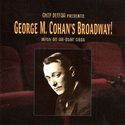
Sunny and sentimental musical theatre songs of yore are embraced and revitalized in sparkling new presentations of material from the songbook of George M. Cohan (1878-1942). In his day, the vaudeville-trained, popular and prolific producer/ performer/ director wrote show after show, usually starring in them. In the new cornucopia of pep and sweetness called George M. Cohan's Broadway! a large number of singers strut their stuff and croon, capturing the style and sensibilities in an immensely entertaining and generous-length sampling of signature numbers and many rarities. Some terse spoken introductions give context, bits of history, and offer appreciation for the talents of the participants. Expanded results of the same agenda fill the very informative booklet of more than 20 pages that comes with the CD. It's authored by Cohan historian/devotee Chip Deffaa who produced this latest in a long series of releases featuring many a gem of George M., and he's one of the set's performers with particular panache, too. His vim is well showcased in "American Ragtime," a duet with the ever-energetic and joyful Jon Peterson (who also has frequent appearances on the album, and who so memorably portrayed Cohan in the one-man stage show George M. Cohan Tonight! and its recent screen adaptation, among other Deffaa-generated Cohan-focused projects. Many members of his "theatre family" return for this treasure chest of zest and old-school balladry, along with first-timers like teenager Ethan Mathias, a prince of precision on three tracks, including the standout number that happens to be Cohan's swan song, a dashing duet with Mr. Deffaa, boasting a title that's the ultimate simile: "Life Is Like a Musical Comedy."
The set is bookended by renditions of the signature anthem "Give My Regards to Broadway." The first version is presented robustly by showbiz veteran Lee Roy Reams, and the splendid Seth Sikes offers a slower and affectionate treatment to end the proceedings, along with some commentary. He also sets up a set of Irish songs and aces one of them, "Nellie Kelly, I Love You." Other tender treats in the program are supplied by honey-voiced Keith Anderson, Josephine Sange, and others. Particularly affecting is Nicolas KIng, with a bittersweet "Let's You and I Just Say Goodbye" gorgeously and gracefully rendered.
One particularly charming track is "The Old Dancing Master," pairing a real-life father and son–Jonathan and Jesse Gellert, respectively–sharing this piece by GMC's own father, Jerry Cohan (and sharing some banter, too). Other echoes of showbiz dazzle and dreams fill George M. Cohan's Broadway!, with many numbers giving nods specifically (and terrifically) to the Great White Way, in addition to the aforementioned theme. Examples abound! The strong-voiced Dea Julien handles "Hello Broadway" and "The Broadway Girl" (Cohan's lyric, with music by Noble McDonald), and other street name-dropping arrives with "I Wanted to Come to Broadway," "The Man Who Owns Broadway," "Busy Little Broadway," "It Isn't Easy to Say Goodbye, Broadway," and a pairing of "All Aboard for Broadway" and "You Can Have Broadway," plus the so-near-and-yet-so-far ode to suburban New Rochelle, "Forty-Five Minutes from Broadway." Now that's what I call talkin' Broadway!
As usual for this ongoing series, the music director/pianist is period-perfect Richard Danley, joined here and there by Carol Sudhalter on baritone sax and Gavin Rice on banjo and ukulele. This jam-packed jamboree, with some never-before-recorded Cohan concoctions among the hummable, smile-inducers in a fascinating and fun return to the past.
 MATT WHITE'S DOLLY
MATT WHITE (CORNET) & BAND
(VOCALS: LIZ KELLEY)
Adhyâropa Records
CD | Digital
Perhaps they are strange musical bedfellows: arrangements featuring adventurous instrumental jazz reworkings of–and embellishments to–melodies written by Dolly Parton paired with a singer's quite loyal renditions of her straight-ahead vocal lines, tempi, and keys. On the intriguing album simply titled Dolly, it feels at first as if the singer's work and the bold and busy treatments by Matt White (arranger and cornet player) and three bandmates are happening on different planets. They somehow co-exist as the best of both worlds: conservative, respectful singing and six degrees of separation. Leader White's plan was to have the vocals by Liz Kelley be very much dutifully à la Dolly in timbre and attitude, surrounded by the decidedly detailed and complex jazz playing, going far afield and diverging even more luxuriously during expansive mid-song instrumental sections.
The chosen bandmates are either current colleagues from Mr. White's teaching career or are his former students: Tim Fischer (guitar), Demetrius Doctor (piano, organ), and Colleen Clark (drums), all making muscular musical contributions.
Subject matter is not primarily happy. Some tear-stained stories tell of affairs, unexpected pregnancies, and break-ups, one despairing piece called "The Bridge" indicates the protagonist's decision to commit suicide. Only one number is something not written by the late legend, but covered by her. It is "The Carroll Country Accident" (with words and music by Bob Ferguson), one of a few selections with drama and misfortune at the center of the story of its lyric. It's the tale of a fatal car crash involving a couple involved in a secret extramarital relationship.
In addition to the early-career Parton picks ("Jolene," "Little Bird," and others) with the appealing "stand-in" country chanteuse, there are three purely instrumental versions of the title song from the movie (and, later, stage musical) 9 to 5, each with a different quotient of faithfulness to the melody as we've come to know it.
The more I listen, the more the head-scratching "It shouldn't work but it does" impact of the juxtaposition of approaches to these songs feels perfectly natural.
|
|